


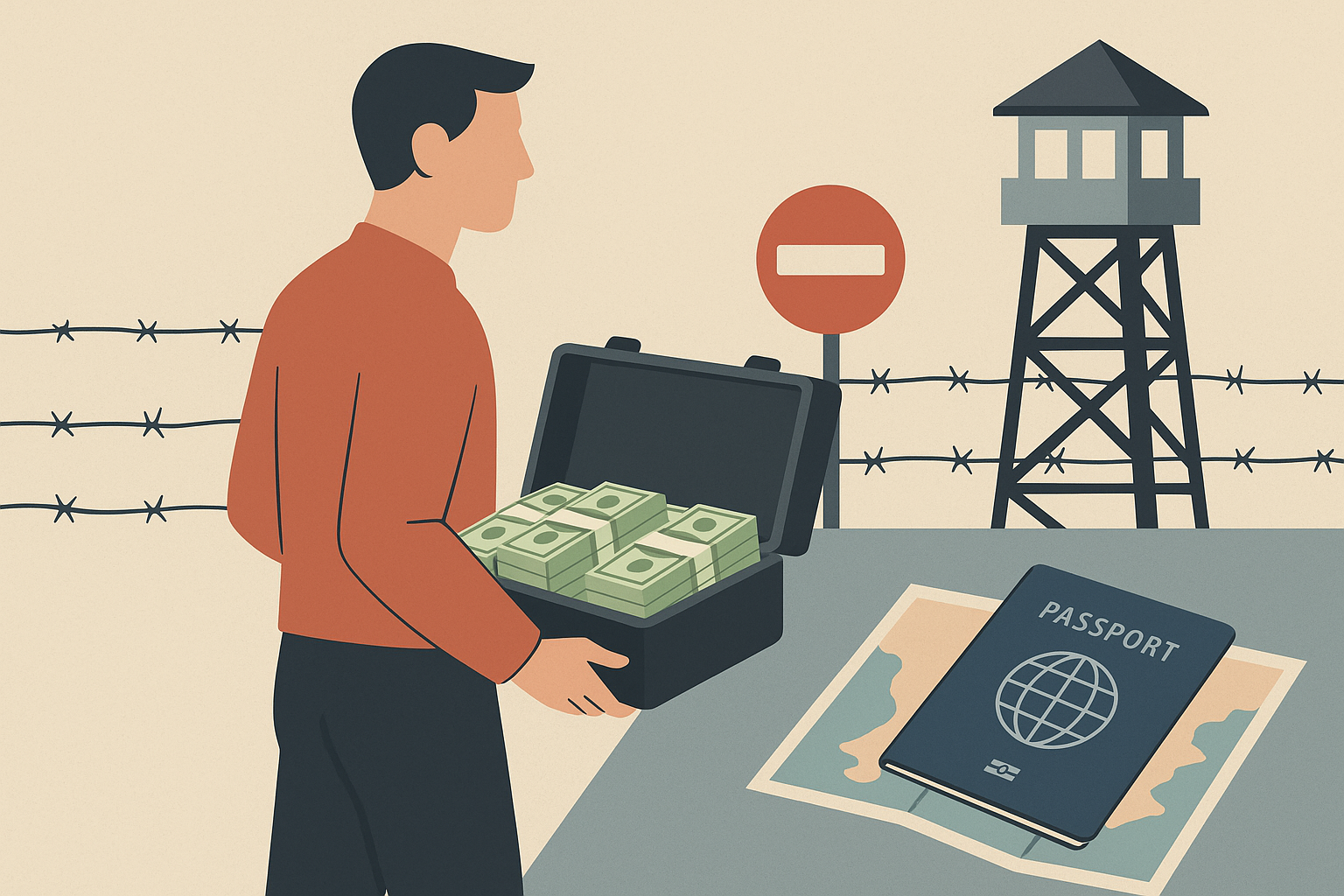
What If You Were Offered $10,000/Month — But Had to Live Under North Korean Rules?
Imagine receiving a job offer that pays $10,000 per month—a life-changing sum for most people. But there’s a catch: you’d have to live in North Korea, one of the world’s most restrictive and controlled societies. Would the money be worth sacrificing your freedom, privacy, and basic human rights? Let me walk you through what this hypothetical scenario would actually look like, based on real conditions in the Democratic People’s Republic of Korea (DPRK).
Understanding North Korea’s Economic Reality
The Salary Gap
To appreciate how extraordinary $10,000 monthly would be in North Korea, you need to understand the country’s economic landscape. The average North Korean worker earns between 5,000 and 10,000 North Korean won per month—roughly equivalent to just $1-3 at black market exchange rates. Even in official terms, the typical annual salary hovers around 2,327,100 KPW, which translates to less than $200 annually when converted at realistic rates.
Pyongyang residents fare slightly better, with per capita income reaching $2,658-2,715, but this is still threefold less than what rural North Koreans earn. The country operates under a centrally planned economy following Juche ideology, where the state controls all means of production and market allocation schemes are severely limited.
| Location | Monthly Salary (USD) | Annual Income (USD) |
|---|---|---|
| Average North Korean Worker | $1-3 | $12-36 |
| Pyongyang Resident | $220-226 | $2,658-2,715 |
| Rural North Korean | $79-113 | $948-1,361 |
| Your Hypothetical Offer | $10,000 | $120,000 |
What Money Can’t Buy
Here’s the uncomfortable truth: North Korea operates a “songbun” system—a social classification structure that determines where citizens can live, what educational opportunities they access, and even what jobs they can hold. Even with $10,000 monthly, you couldn’t simply buy freedom, travel freely, or access the outside world. The regime maintains control through fear, surveillance, and strict punishment for violations.
Daily Life Under North Korean Control
Surveillance and Loss of Privacy
From the moment you arrive in North Korea, your privacy ceases to exist. Border officials routinely confiscate visitors’ cell phones upon arrival, returning them only upon departure. Your movements and communications would be under constant surveillance, and authorities could search your personal belongings and review electronic device contents without warning.
You’d be required to have portraits of Kim Il-Sung and Kim Jong-Il in your home, which you’d need to clean daily as a sign of respect. Propaganda permeates every corner of life—movies, television, theater, comic books, and street posters all glorify the Kim family.
Restrictions on Movement and Association
Foreigners in North Korea must be accompanied by an official government guide at all times. Your guide would control where you go, whom you speak to, and what you’re allowed to see. Even simple activities that we take for granted become potential violations:
- Unauthorized conversations with locals could lead to arrest
- Making purchases in stores not designated for foreigners is prohibited
- Using public transportation is completely forbidden for foreigners
- Traveling outside Pyongyang requires special permission obtained by your guide
Police checkpoints are common throughout the country, and you must be prepared to show identification at any time. Major highways are in decent condition, but foreigners aren’t allowed to drive—tour guides or authorities provide all transportation.
What You Cannot Do in North Korea?
The list of restrictions is extensive and often includes activities that seem mundane in free societies:
- Photography: Taking photos of airports, roads, bridges, seaports, rail stations, or military personnel/facilities is strictly prohibited
- Media consumption: Accessing phones, computers, televisions, radios, or media content not sanctioned by the government is illegal and considered “anti-socialist behavior”
- Leaving the country: It’s illegal for residents to leave without government permission, and those caught attempting to escape face torture, forced labor, and life imprisonment
- Foreign media: The punishment for consuming foreign materials has increased drastically—up to 10 years for watching foreign broadcasts, and life imprisonment or death for distributing South Korean media
The Propaganda Machine
How North Korea Controls Information
North Korea operates one of the world’s most extreme censorship regimes. The government does not permit freedom of thought, expression, or information, and all media is strictly controlled. State media constantly bombards the population with flattering reports about the Kim family and their daily agendas.
The government regularly jams Chinese mobile phone services at the border and arrests people for communicating with contacts outside the country. In 2024, two 15-year-old boys were sent to a political prison camp simply for listening to K-pop and sharing it with classmates—their parents were also sent to concentration camps for “failing to properly raise their children”.
Is North Korea Really as Strict as Shown in Media?
Unfortunately, yes. The UN Human Rights Office has observed that over the past decade, the North Korean government has tightened its grip on “every facet of citizens’ lives”. According to a comprehensive UN report, “No other populace faces such limitations in the contemporary world,” with surveillance measures becoming “more widespread” thanks to technological advancements.
Volker Türk, the UN High Commissioner for Human Rights, warned that North Koreans “will continue to endure additional suffering, severe oppression, and fear that they have long experienced” if conditions persist.
Working Conditions in North Korea
The Reality of Employment
North Korea’s official employment statistics suggest almost full employment, with about 88% of the population aged 20-59 officially employed in socialist sectors. However, the reality is starkly different. Research estimates that only 31%-62% of the employed population can actually afford a decent living.
The majority of North Korean companies are not in full operation, resulting in very unstable income. Many North Koreans regularly engage in household economic activities like food production for self-consumption because their official jobs don’t provide sufficient income.
Can Foreigners Earn Money in North Korea?
While technically possible, earning money as a foreigner in North Korea comes with severe limitations. Foreign workers have historically been sent to places like the Kaesong Industrial Complex, but workers’ rights are severely compromised in these arrangements. North Korea also exports labor to other countries, with the government directly controlling and monitoring these workers.
Any foreigner working in North Korea would face:
- Constant monitoring and reporting requirements
- Severe restrictions on spending and currency exchange
- Limited access to banking facilities (no ATMs exist)
- Expectations to use Euro, Chinese renminbi, or U.S. dollars instead of local currency
Traveling to North Korea: Safety Considerations
Government Travel Advisories
Multiple governments issue the strongest possible warnings against traveling to North Korea. Canada advises to “avoid all travel” due to the risk of arbitrary detention and the uncertain security situation. The U.S. State Department maintains similar warnings.
The Canadian government explicitly states: “If you choose to travel to North Korea despite the advisory in place,” you should know that consular assistance is “extremely limited,” and if detained outside Pyongyang, officials “may not be able to provide consular assistance”.
What Happens If You Break the Rules in North Korea?
Breaking North Korean rules—even unknowingly—can result in severe consequences. The government increasingly implements the death penalty, including for people caught sharing foreign films and TV dramas. Penalties range from:
- Minor infractions: Fines, equipment confiscation, or temporary detention
- Serious violations: Torture, forced labor camps, life imprisonment
- Severe crimes (by North Korean standards): Public execution
Even remarks considered critical of the state and its leadership could result in imprisonment. You’d need to be extraordinarily careful when discussing the country’s political system or the ruling Kim family. They follow a rule that says if someone commits crimes his/her entire family would be punished.
Can You Leave North Korea Anytime?
One of the most crucial questions: could you leave if things became unbearable? The short answer is no—not easily, and potentially not at all. North Korea has become nearly impossible to escape, with stricter border controls along the China frontier and orders for troops to shoot individuals attempting to cross.
For foreigners, while technically you could leave at the end of your authorized stay, the government exercises strict control over consular access and departure. If you’re detained for any reason, leaving becomes exponentially more difficult.
The Verdict: Could You Really Live There for Money?
Weighing Freedom Against Financial Security
Let’s be brutally honest: $10,000 per month is meaningless if you can’t enjoy basic human freedoms. You’d be trading:
- Your privacy for constant surveillance
- Your freedom of movement for mandatory government escorts
- Your access to information for state-controlled propaganda
- Your ability to communicate with loved ones for monitored, restricted contact
- Your personal safety for a legal system with no due process
The Psychological Toll
Beyond physical restrictions, living under such conditions takes an immense psychological toll. North Korean defectors consistently report that “life under the leadership of Kim Jong Un has grown increasingly difficult, with citizens feeling heightened levels of fear”. One woman who escaped at age 17 shared: “In the early days of Kim Jong Un’s regime, there was a glimmer of hope, but that hope quickly faded. The government progressively restricted people’s ability to earn a living independently, turning daily existence into a constant struggle”.
As a foreigner, you’d experience isolation, constant anxiety about inadvertently breaking unknown rules, and the knowledge that any misstep could result in detention or worse.
Frequently Asked Questions
Can foreigners earn money in North Korea?
Yes, foreigners can technically work in North Korea, but opportunities are extremely limited and heavily monitored. Foreign workers have historically been employed in special economic zones like the Kaesong Industrial Complex, though workers’ rights are severely compromised. Any foreigner earning money would face constant surveillance and severe restrictions on how they can spend or transfer their earnings.
Do North Koreans get paid salaries?
North Koreans officially receive salaries ranging from 5,000-10,000 won monthly ($1-3 USD at black market rates). However, official employment doesn’t guarantee actual income, as many state enterprises aren’t fully operational. Most North Koreans supplement their official income through informal markets and household production activities.
What happens if you break rules in Korea?
Punishments for breaking North Korean rules are severe and often disproportionate. Minor infractions can lead to fines, arrest, or detention, while serious violations result in torture, forced labor, life imprisonment in political prison camps, or execution. Even actions considered normal in other countries—like unauthorized conversations with locals or watching foreign media—can be punished harshly. They follow a rule that says if someone commits crimes his/her entire family would be punished.
How much freedom do foreigners have in North Korea?
Foreigners have extremely limited freedom in Korea. You must be accompanied by an official government guide at all times, cannot use public transportation, need permission to travel outside Pyongyang, and face constant surveillance. Your communications are monitored, your movements are tracked, and you have no right to privacy.
Is North Korea really as strict as shown in media?
Yes, and potentially even stricter. The UN Human Rights Office confirms that no other population faces such limitations in the contemporary world, with surveillance becoming more widespread due to technological advancements. Multiple independent reports from defectors, international organizations, and human rights groups consistently document the extreme level of control.
Can you leave North Korea anytime?
For foreigners on authorized visits, you can theoretically leave at the end of your visa period, though the government controls all aspects of departure. However, if detained for any reason, leaving becomes extremely difficult or impossible. For Korean citizens, leaving without permission is illegal and punishable by torture, forced labor, or death. Border controls have become increasingly strict, with shoot-on-sight orders for those attempting to escape.
What is life like for foreigners in North Korea?
Life for foreigners in North Korea is highly controlled and isolating. You’d live in designated foreigner areas (likely Pyongyang), be accompanied by government guides constantly, have limited interaction with locals, face restricted access to goods and services, and experience constant surveillance. Medical facilities are poor, banking is virtually non-existent, and you’d have no access to outside information sources.
Is it safe to work in Korea?
Working in North Korea carries significant safety and security risks. The Canadian government advises to “avoid all travel” due to risks of arbitrary detention. Medical facilities are poor with frequent power outages and medicine shortages. There’s constant risk of detention for inadvertent rule violations, and consular assistance is extremely limited if problems arise. The unpredictable security situation on the Korean Peninsula adds another layer of risk.
We don’t claim this information to be real facts or 100% true, this informative blog was written after various and deep researches and from sources.-
- Liberty in North Korea – Understanding North Korean Challenges: https://libertyinnorthkorea.org/learn-nk-challenges
- Human Rights Watch – North Korea Report: https://www.hrw.org/world-report/2024/country-chapters/north-korea
- Travel.gc.ca – North Korea Travel Advisory: https://travel.gc.ca/destinations/north-korea