


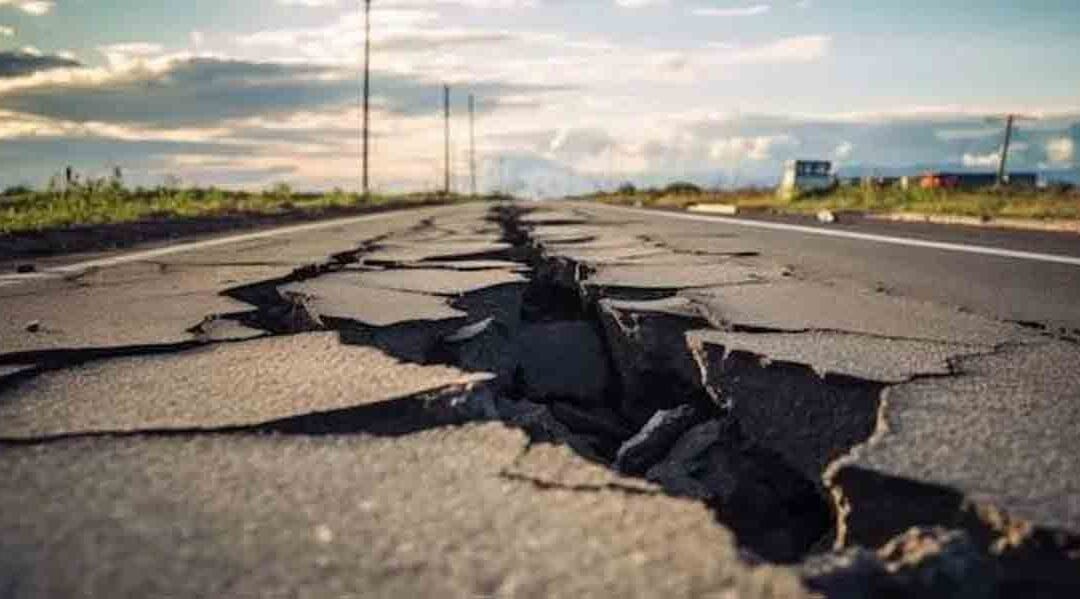
What Exactly Happened: The Earthquake In Bangladesh and Kolkata felt earthquake too.
Where The Quake Struck- source
Later, I checked the updates and saw the same details repeated by multiple agencies. Around 10:08–10:10 am IST, an earthquake of roughly magnitude 5.2–5.7 hit near Narsingdi/Ghorashal, close to Dhaka in Bangladesh, at a shallow depth of about 10 km.
Because the epicentre was so shallow and relatively close to the India–Bangladesh border, the shockwaves reached West Bengal, Kolkata, and parts of Northeast India in just seconds.
Key points from official sources:
- Magnitude reported between 5.2 and 5.7 on the Richter scale.
- Epicentre near Narsingdi / Ghorashal region of Bangladesh.
- Depth around 10 km, which makes tremors easier to feel at the surface.
Mini takeaway: It wasn’t a massive quake by global standards, but its shallow depth and location meant millions of people felt it clearly across borders.
How Kolkata Felt The Shakings
Those Few Seconds In The City- Source
In Kolkata, the tremors lasted only a few seconds, but they were enough to send people rushing out of homes, offices, and malls. I remember colleagues suddenly standing up mid-call, looking at each other, silently asking, “Is this really happening?”
People in high-rise apartments noticed it first:
- Ceiling fans swayed.
- Hanging lights and photo frames shook slightly.
- Some reported chairs and sofas moving gently for 7–10 seconds.
- Areas where tremors were reported:
- Kolkata (Salt Lake, New Town, Rajarhat, central and north Kolkata).
- Malda, Nadia, Cooch Behar, North and South Dinajpur districts.
One resident from North Kolkata described it perfectly: first a strange feeling in the body, then the realisation when the fan moved that it was an earthquake, not dizziness.
Mini takeaway: In Kolkata, the shaking was mild but undeniable, especially in taller buildings, turning an ordinary morning into a tense few minutes.
do you know streamer awards nominee are live?
Impact In Bangladesh And Northeast India
Dhaka And Nearby Regions
For people in and around Dhaka, the experience was even more intense. The epicentre being just a few kilometres from Narsingdi meant they were closer to the heart of the quake.
Reports mentioned:
- Residents in Dhaka and nearby towns rushing out of homes and offices.
- The shaking strong enough to briefly interrupt a Test cricket match in Dhaka before play resumed.
- Thankfully, no immediate reports of casualties or major damage.
Northeast India Felt Earthquake Too
It wasn’t just Kolkata. Cities like Guwahati, Shillong, and Agartala also felt the tremors, with people leaving buildings for open areas as a precaution.
Mini takeaway: The quake’s reach reminded everyone in the region — from Dhaka to Guwahati — that we share not just culture and borders, but also the same underlying seismic risk.
Why Tremors Earthquake Travel From Bangladesh To Kolkata
The Science Behind The Shaking
From a distance, it can feel mysterious: how can an earthquake in Bangladesh shake fans in Kolkata? The answer lies in plate tectonics and shallow seismic activity. Bangladesh and eastern India sit near the boundary of the Indian Plate pushing under the Eurasian and Burmese plates, a region known for moderate to strong quakes.
Because this event was:
- Moderate magnitude (around 5+), and
- Shallow (about 10 km deep),
the energy didn’t have to travel far through the crust before reaching cities like Kolkata and Guwahati.
Why It Felt Stronger In High-Rise Buildings
People on higher floors felt more dramatic sway for a simple reason: taller structures amplify motion, a bit like the tip of a tree moving more than the trunk in strong wind.
Mini takeaway: Even when the epicentre is across the border, shallow quakes in this seismic zone can easily send noticeable tremors into eastern India, especially in tall buildings.
Immediate Response: Panic, Precaution And Relief
What Authorities Said
Within minutes, news channels, apps, and social media started buzzing with confirmations. Meteorological and disaster management agencies in both Bangladesh and India reported the key details: magnitude, depth, epicentre, and — most importantly — that there were no immediate reports of serious damage or casualties.
Officials urged people to:
- Stay calm and avoid using lifts during tremors.
- Move to open areas if shaking is strong.
- Watch out for aftershocks, even if initial impact is mild.
From my own experience, that official reassurance made a difference. Once the “no damage” updates came in, the tension in the room dropped — replaced by that odd, quiet gratitude that things weren’t worse.
Mini takeaway: Quick communication and clear messaging from agencies helped prevent rumour-driven panic and kept people reasonably calm after the tremors.